How Osteopathy Improves Posture Naturally
You notice it at the end of a long Tokyo workday – your shoulders creep forward, your neck feels tight, and standing upright takes effort instead of feeling natural. That is usually the moment people start asking how osteopathy improves posture, especially when stretching, better chairs, and reminders to sit up straight have not solved the problem.
Posture is not simply a matter of discipline. In many cases, it reflects how well the body can adapt to stress, movement habits, old injuries, desk work, pregnancy, training loads, or even jaw and breathing patterns. When one area loses mobility or stays under constant tension, the body compensates elsewhere. Over time, those compensations can become your normal posture.
Osteopathy looks at that pattern as a whole. Rather than forcing the body into a more upright shape, treatment aims to remove the restrictions that make good posture difficult to maintain. This is why many patients feel not only straighter after care, but also lighter, less compressed, and more comfortable in daily movement.
Why posture changes in the first place
Poor posture is often described as if it were a bad habit. Sometimes habits do play a role, but the full picture is usually more complex. A person may sit with rounded shoulders because the upper back is stiff, the rib cage does not move well, and the neck is overworking to compensate. Someone else may shift their weight unevenly because of a past ankle sprain, lower back irritation, or tension through the pelvis.
Stress matters too. When the nervous system stays in a more protective state, muscles often tighten around the neck, jaw, chest, and diaphragm. That can create a posture that looks collapsed or guarded, even in otherwise active people. Pregnancy and postpartum recovery can also change alignment significantly, not because the body is failing, but because it is adapting to major structural and hormonal changes.
This is why a posture problem rarely starts and ends where you feel it. The neck may hurt, but the rib cage, thoracic spine, diaphragm, pelvis, feet, or jaw may be contributing. Treating posture well requires understanding those relationships.
How osteopathy improves posture at the root
The main reason osteopathy can help posture is that it addresses function, not just appearance. A skilled osteopath assesses how different parts of the body move together and where compensation has developed. The goal is to improve the body’s ability to support itself with less strain.
Releasing tension that pulls the body out of balance
When muscles and fascia stay tight for too long, they can limit how you stand, breathe, and rotate. Common examples include tight hip flexors from prolonged sitting, chest tension that rounds the shoulders, or suboccipital tension that keeps the head drifting forward.
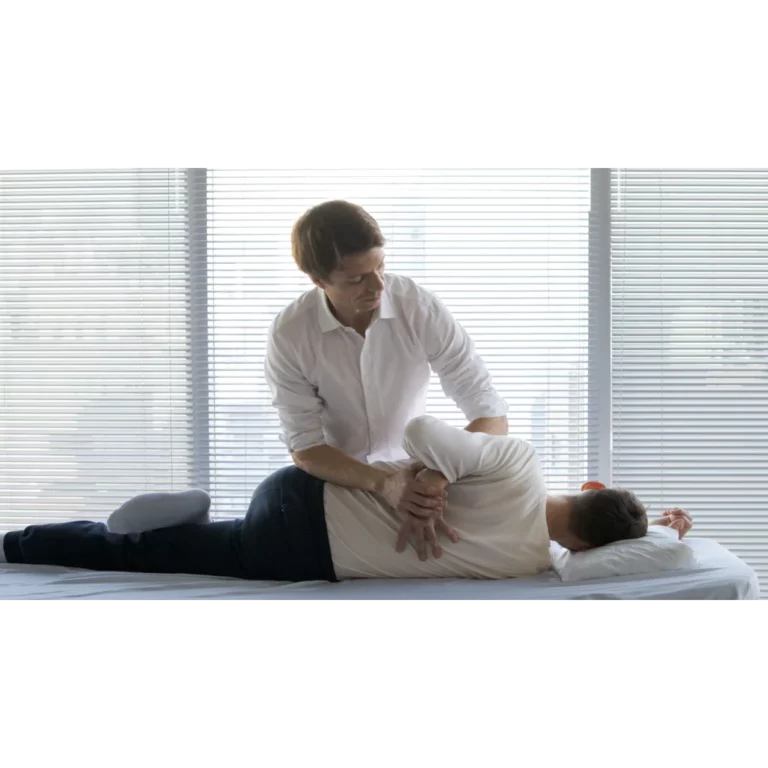
Osteopathic treatment uses hands-on techniques to reduce this excessive tension. Soft tissue work, gentle joint mobilization, and myofascial approaches can help restore a more neutral resting position. The change is not about forcing the shoulders back. It is about reducing the pull that keeps them forward in the first place.
Restoring mobility where the body has become stiff
Good posture depends on movement. If the mid-back is rigid, the lower back or neck often compensates. If the pelvis does not move well, the entire spine may adjust around it. This is one reason people can feel like they are trying very hard to stand correctly and still feel uncomfortable.
Osteopathy helps by improving mobility in joints and tissues that are not moving well. That may include the spine, ribs, sacrum, hips, or even the feet. Once the body has more options, posture becomes easier to maintain without constant effort.
Improving body awareness and coordination
Some posture issues are less about strength and more about awareness. If your body has adapted to a protective pattern for months or years, that pattern can feel normal. After treatment, patients often notice they can sense when they are collapsing into one side, clenching through the jaw, or overusing the lower back.
This increased awareness matters. It gives you the ability to make small corrections before discomfort builds. In practice, osteopathic care often works best when manual treatment and simple movement advice support each other.
How osteopathy improves posture beyond the spine
People often assume posture treatment means working only on the back and neck. In reality, posture is influenced by the entire body.
The feet affect how weight transfers upward. The pelvis and hips influence spinal alignment. The rib cage and diaphragm shape breathing mechanics, which can change tension through the chest, neck, and shoulders. Even TMJ dysfunction can contribute to head and neck imbalance. If one link in that chain is restricted, the body compensates elsewhere.
This whole-body approach is one of the key reasons osteopathy is effective for posture-related complaints. Instead of isolating one painful area, the practitioner looks for the pattern behind it. For an office worker, that may mean addressing thoracic stiffness and diaphragm restriction. For a runner, it may involve the hips and feet. For a postpartum patient, the pelvis, abdominal wall, and breathing mechanics may be central.
What a posture-focused osteopathic appointment may involve
A high-quality assessment does not begin with a generic correction exercise. It begins with listening. Your osteopath will usually ask about where you feel pain or fatigue, how long it has been present, your work setup, stress levels, exercise habits, past injuries, and any major life changes such as pregnancy or increased training load.
From there, the physical assessment looks at how you stand, bend, rotate, and distribute weight. The osteopath may evaluate spinal mobility, rib movement, pelvic balance, muscle tone, breathing pattern, and areas of tenderness or restriction. This helps identify whether the visible posture issue is the main problem or a compensation for something deeper.
Treatment is then tailored to the individual. Some patients benefit from more structural work to restore joint motion. Others need gentler techniques because their nervous system is highly reactive, they are pregnant, or they are already in significant pain. In a premium one-on-one setting, the treatment plan should feel precise, comfortable, and clearly explained.
What results can you realistically expect?
Posture often improves in stages. Some people feel an immediate change after treatment – they stand taller, breathe more freely, or notice less neck and shoulder strain. That early shift can be encouraging, but long-term improvement depends on why the posture changed in the first place.
If the main issue is reversible tension and stiffness, progress may be fairly quick. If the pattern has developed over years of desk work, repetitive training, stress, or previous injury, treatment usually works best as a process. The body needs time to adopt a new baseline.
It also depends on what you mean by better posture. For some patients, success means less pain at the computer. For others, it means easier running form, less fatigue during pregnancy, fewer headaches, or a more open chest when breathing. A realistic practitioner will focus on function and comfort, not a rigid ideal posture.
When posture problems deserve professional attention
If posture changes are accompanied by persistent pain, headaches, jaw tension, tingling, sciatica, or repeated flare-ups, it is worth getting assessed. The same applies if you feel crooked after an injury, struggle with desk-related strain, or cannot maintain an upright position without effort.
Posture-related discomfort is common, but common does not mean harmless. Small imbalances can create cumulative strain over time, particularly for professionals working long hours, active adults pushing through recurring tightness, or mothers adapting to pregnancy and childcare demands.
For many patients, the value of osteopathic care is not only symptom relief. It is finally understanding why the body has been compensating and getting a treatment plan that fits real life.
At Osteopath Tokyo, that means careful assessment, hands-on treatment, and guidance that respects both your symptoms and your schedule. Whether you are dealing with office-related tension, sports strain, or postpartum changes, the aim is the same – to help your body find a more balanced, sustainable way to move and hold itself.
Better posture should not feel like a constant battle with your own body. When the underlying restrictions are addressed, standing well becomes less about trying harder and more about feeling at ease in your own structure.